

Choosing the best time to visit Turkey is perhaps the most critical decision you will make when planning your adventure. Turkey is a vast country, spanning two continents and encompassing diverse climates, from the snow-capped peaks of eastern Anatolia to the sun-drenched olive groves of the Aegean coast. Because the geography is so varied, your experience in Istanbul might be entirely different from your experience in Antalya on the exact same day.
For international travelers, understanding these nuances is essential. Whether you want to witness the thousands of tulips blooming in Istanbul, fly in a hot air balloon over a snow-covered Cappadocia, or lounge on the turquoise beaches of the Mediterranean, timing is everything. This comprehensive guide will walk you through the seasons, weather patterns, and local events to help you identify the perfect window for your Turkish getaway.
Istanbul Travel Guide: The Ultimate 2026 First-Timer’s Handbook
Overview of Turkey’s Climate and Travel Seasons
Turkey’s climate is generally characterized by hot, dry summers and cool, wet winters, but this is a broad generalization. Because the country is surrounded by four seas—the Mediterranean, Aegean, Marmara, and Black Sea—coastal areas enjoy milder weather, while the inland Anatolian plateau experiences more extreme temperature shifts.
When you are deciding when to visit Turkey, it is helpful to categorize the year into three main travel seasons:
- High Season (June – August): Hot temperatures across the country and peak tourist crowds. Prices for hotels and flights are at their highest.
- Shoulder Season (April – May and September – October): Widely considered the best season to travel Turkey. The weather is mild, and the major sites are less crowded.
- Low Season (November – March): The weather can be cold and rainy, but this is the prime time for budget travelers and those seeking to see Turkey without the crowds.
Best Time to Visit Turkey by Season
Spring (March – May)

Spring is arguably the most beautiful time to explore the country. As the winter frost melts away, the landscape turns vibrant green, and wildflowers begin to carpet the valleys of Cappadocia.
Weather Conditions: Temperatures are moderate, ranging from 15°C to 25°C. In Istanbul, the air is crisp and pleasant, while the southern coast begins to warm up significantly by May.
Pros and Cons:
- Pros: Perfect weather for outdoor sightseeing; the famous Istanbul Tulip Festival takes place in April.
- Cons: Early spring can still be rainy in the northern regions; popular sites begin to get busy toward the end of May.
Best Destinations to Visit: Istanbul is a must for the tulips. It is also an ideal time for hiking the Lycian Way or visiting the ancient ruins of Ephesus before the summer heat becomes unbearable.
Summer (June – August)
Summer in Turkey is synonymous with endless sunshine and vibrant nightlife. This is the period when the coastal resorts of Bodrum and Marmaris truly come to life.

Weather Conditions: Expect high temperatures often exceeding 35°C, especially in the south and east. Istanbul can be quite humid, while the inland areas like Ankara and Cappadocia are dry and hot.
The Ultimate Turkey Tourist Visa Guide: Everything You Need to Know
Pros and Cons:
- Pros: Guaranteed beach weather; all seasonal ferries and coastal tours are in full operation.
- Cons: Intense heat can make midday sightseeing exhausting; long queues at major landmarks.
Best Destinations to Visit: The Turquoise Coast (Antalya, Kas, and Fethiye) is the place to be. If the heat is too much, the cooler highlands of the Black Sea region (Karadeniz) offer a refreshing escape.
Autumn (September – November)
Many seasoned travelers believe autumn is the true best time to visit Turkey. The sweltering heat of August fades into a gentle warmth that makes exploring ancient cities a delight.

Weather Conditions: September and October offer “Goldilocks” weather—not too hot and not too cold. Temperatures stay around 20°C to 28°C. By November, the rains begin in the north, and temperatures drop.
Pros and Cons:
- Pros: The sea is still warm enough for swimming until late October; harvest season means incredible fresh produce and food festivals.
- Cons: Days start getting shorter; some coastal hotels may begin closing for the season in late November.
Best Destinations to Visit: Cappadocia is stunning in autumn as the vineyards turn golden. It is also a great time to visit the southeastern cities like Mardin and Gaziantep, where summer temperatures are otherwise too extreme.
Winter (December – February)

Winter reveals a quieter, more romantic side of Turkey. While most tourists stay away, those who visit during this time are rewarded with a unique perspective on the country’s most famous sites.
Weather Conditions: Istanbul is often cold, damp, and occasionally sees snow. Central Anatolia, including Cappadocia and Ankara, experiences heavy snowfall and temperatures well below freezing. The southern coast remains mild but can be quite rainy.
Pros and Cons:
- Pros: Lowest prices of the year; no crowds at the Hagia Sophia or Ephesus; great skiing opportunities in Uludağ or Erciyes.
- Cons: Grey skies and rain in many areas; some ferry routes may be canceled due to rough seas.
Best Destinations to Visit: Cappadocia is magical under a blanket of snow. This is also the best time for a city break in Istanbul, focusing on museums, grand palaces, and cozy traditional hammams.
Planning Your Turkey Trip Cost: A Complete Budgeting Guide for International Travelers
Month-by-Month Turkey Climate Guide
To help with your Turkey travel planning, here is a quick breakdown of what to expect throughout the year:
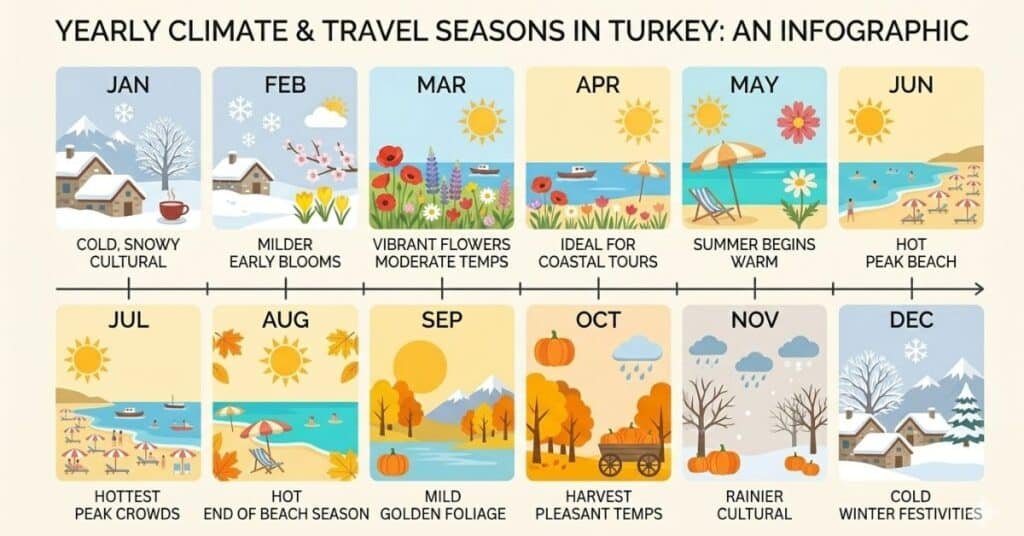
- January: Very cold; best for skiing or indoor museum tours in Istanbul.
- February: Still wintery; a great month for budget travelers.
- March: Spring begins in the south; Cappadocia starts to wake up.
- April: Peak spring; Istanbul is covered in tulips; perfect for sightseeing.
- May: Warm and sunny; the start of the sailing season on the Mediterranean.
- June: Start of summer; lively atmosphere but increasing crowds.
- July: Very hot; best for beach holidays and boat trips.
- August: Peak heat and peak crowds; stay hydrated and seek shade.
- September: Perfect balance; warm sea and pleasant air.
- October: Still warm in the south; great for hiking and ancient ruins.
- November: Cooling down; transition into the rainy season.
- December: Cold and festive; snow in the mountains and empty historical sites.
Best Time to Visit Turkey for Specific Activities
Best Time for Sightseeing
If your goal is to explore the Roman ruins of Ephesus or the palaces of Istanbul, aim for the shoulder seasons: April, May, September, and October. You will avoid the exhaustion of the summer sun and the inconvenience of winter rains.
Best Time for Beaches
For the ultimate Mediterranean experience, June through September is the prime window. July and August are the hottest months, perfect for those who want to spend all day in the water.
Best Time for Hot Air Balloons in Cappadocia
While balloons fly year-round, the best season to travel Turkey for this specific activity is from April to October. During these months, the wind is most stable, meaning there are fewer cancellations. Flying over the snow in January is also possible and beautiful, but the risk of cancellation is higher.
Best Time for Budget Travel
If you are looking to save money, November to March is the ideal period. You will find significantly lower rates on luxury hotels and domestic flights, though you must be prepared for colder weather.
Travel Tips for Different Seasons
- Summer Safety: If visiting in July or August, always carry water. Plan your visits to ruins like Ephesus for the early morning or late afternoon to avoid heatstroke.
- Winter Packing: Even if you are heading to the “sunny south” in winter, bring a waterproof jacket and layers. It may not be freezing, but the rain can feel quite cold.
- Spring Allergies: Turkey is very green in the spring; if you suffer from pollen allergies, bring your medication as you explore the blooming valleys.
- Booking in High Season: If you plan to visit in summer, book your domestic flights and Cappadocia cave hotels at least 3–4 months in advance.
Suggested Travel Months for First-Time Visitors
For a first-time visitor wanting the “complete” experience—Istanbul, Cappadocia, and the coast—we recommend May or September.
These months provide the most consistent Turkey weather by month across all regions. You will have enough warmth for a boat trip on the Bosphorus, clear skies for a balloon flight in Cappadocia, and pleasant temperatures for wandering through the marble streets of Ephesus.
Frequently Asked Questions
Is Turkey too hot in the summer?
For some, yes. Temperatures in the south can reach 40°C. However, the heat is usually dry, making it more bearable than humid climates. If you are sensitive to heat, avoid July and August.
Does it snow in Turkey?
Yes! Istanbul gets occasional snow, but central and eastern Turkey see heavy snowfall every year. Cappadocia looks stunning when the fairy chimneys are covered in white.
When is the cheapest month to fly to Turkey?
Generally, January and February are the cheapest months for international flights and accommodation.
Can I swim in the Mediterranean in October?
Yes! The water retains its heat from the long summer, and swimming in Antalya or Kas in early to mid-October is very popular and pleasant.
Are all attractions open in the winter?
Major sites like the Hagia Sophia, Topkapi Palace, and Ephesus stay open year-round. However, some smaller museums or coastal boat tours may have reduced hours or close entirely in the low season.

Conclusion
Ultimately, the best time to visit Turkey depends on your personal priorities. If you crave sunshine and vibrant beach life, the summer months will not disappoint. If you prefer quiet reflection among ancient ruins and cooler air, the spring and autumn months are your best bet. Even the winter months offer a unique, snow-dusted charm for those willing to brave the cold.
No matter when you choose to go, Turkey’s rich history and unmatched hospitality remain constant. By using this Turkey climate guide, you can plan your trip with confidence, knowing you have chosen the right window to experience the magic of this incredible country.